

个人简介
新闻今日谈


推荐博文
- ·China, Russia launch fourth joint Arctic scientific expedition, process lasts about 62 days: report
- ·Chinese Embassy in Thailand issues reminder to nationals participating in cultural and sports activities in Thailand
- ·美媒高呼申京是超级巨星!轰26+9还隔扣追梦 火箭惨败唯一亮点
- ·一人卖保险,全家不要脸?
- ·王星已与女友见面,称所在大楼至少关押50人!泰警方表示调查中其还不能离泰
公寓
2026-08-26
分类: 超凡蜘蛛侠
公寓
北京监狱开通支付宝扫码押金:每月一次,最高每次1000元。_我的网站

A |
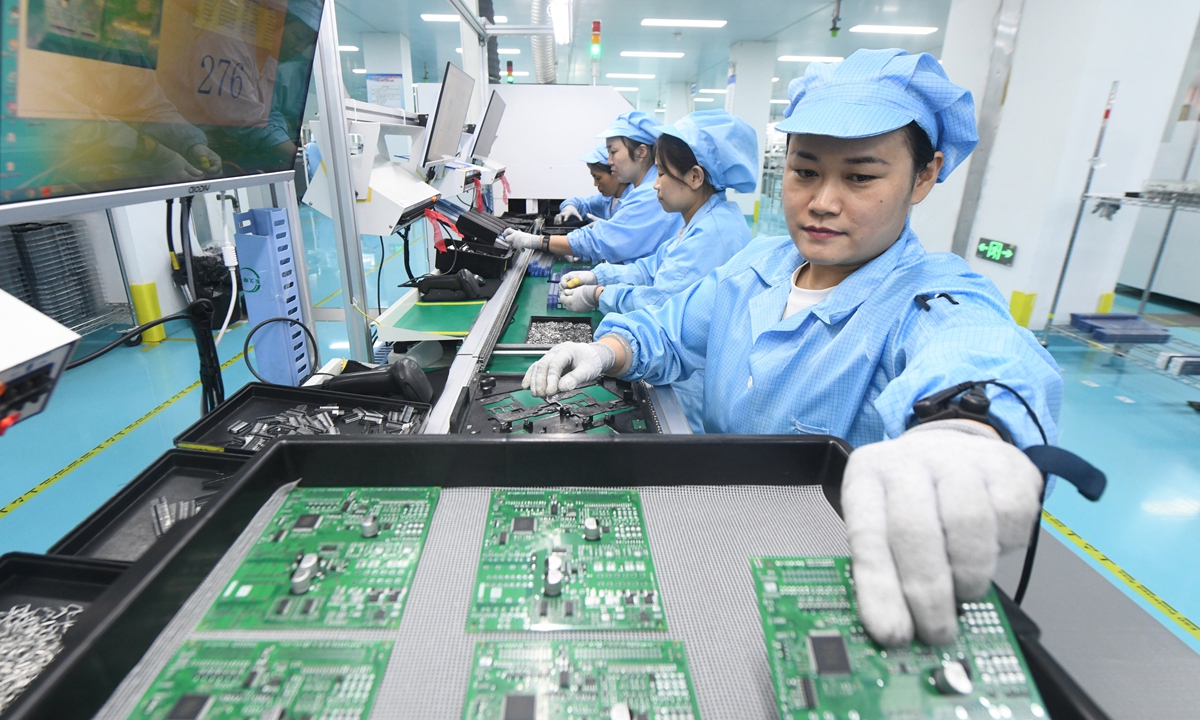
China's exports of integrated circuits (ICs) reached $216.02 billion in the first seven months of 2026, up 99.5 percent year-on-year, according to data released by the General Administration of Customs (GAC) on Friday.
Chinese experts said that rising global artificial intelligence (AI) demand is a factor, but the main drivers of the leap in chip exports are the country's technological breakthroughs and upgraded industrial chain.
The robust growth in IC exports also came as China's overall foreign trade saw stable expansion. According to data released by the GAC, the sound upward trend in China's foreign trade continued in July, with growth of 19.2 percent year-on-year to reach 4.66 trillion yuan ($686.26 billion), remaining above 4 trillion yuan for the fifth consecutive month.
In the first seven months of the year, total foreign trade in goods amounted to 30.13 trillion yuan, up 17.3 percent year-on-year, the data showed.
"Since the start of this year, China's economy has forged ahead against headwinds and moved toward innovation-driven, higher-quality development, providing strong underpinning for the growth of foreign trade," said Lü Daliang, an official with the GAC.
According to the GAC, China's exports of electromechanical products reached 11.12 trillion yuan between January and July, up 21.2 percent year-on-year. They accounted for 63.8 percent of the country's total exports, up 3.8 percentage points on a yearly basis.
There was notable progress in green and low-carbon products, with exports of electric vehicles (EVs) and lithium batteries rising by 71.2 percent and 35.8 percent, respectively, while exports of 3D printers soared by 110 percent, with industrial robots jumping 13.2 percent and ships 32.7 percent.
"The surge in China's chip exports reflects breakthroughs in multiple aspects," Fu Liang, a Beijing-based tech analyst, told the Global Times on Friday. Fu pointed to a rise in mature-node capacity, industrial and supply chain resilience, and scale production advantages of Chinese companies.
As demand for chips in automotive electronics, industrial control systems, and household appliances keeps rising, China-made mature-process chips - backed by reliable supply capability and strong cost-performance - have become an indispensable link in the global supply chain, Fu said.
Meanwhile, there has been an upgrade in China's chipmaking industry, such as the new chip design approach at Huawei based on the company's Tau Scaling Law, and the international competitiveness of China-made chips is expected to increase, supporting further growth in exports, the expert noted.
China recently issued a revised regulation on protection of IC layout-designs. Scheduled to take effect on October 15 this year, the regulation aims to strengthen the protection and application of layout-designs, and improve registration and management systems by elevating proven practices into regulations, while also aligning with relevant laws and international treaties.
These institutional upgrades are unfolding alongside broader efforts to expand domestic demand and open the Chinese market wider to the world. China has also accelerated imports in the first seven months of this year to promote a more balanced development of foreign trade. China has remained the world's second-largest import market for 17 consecutive years. In the first seven months of 2026, China's import growth outpaced export growth by 8 percentage points, according to the GAC.
In addition, China's imports and exports with over 180 countries and regions registered growth over the period. Specifically, the country's trade with ASEAN, the EU, Latin America, and Africa rose by 20 percent, 9.5 percent, 15.4 percent, and 18.9 percent year-on-year, respectively. Trade with the US, however, fell by 1.6 percent, with the decline narrowing by 2 percentage points compared with the first half of the year, according to the GAC.
Amid a complex external environment, China has leveraged its complete industrial chain to accelerate trade structure upgrading, driving brisk growth in both imports and exports, Wen Bin, chief economist of China Minsheng Bank, told the Global Times.
Although China's foreign trade sector still faces pressure in the second half of the year, Wen said the same fundamentals are still supporting China's export growth: the competitiveness of China's "new new three" products, the ongoing AI investment cycle, plus a raft of domestic risk-mitigation policies covering forex, fiscal and customs.
"China's export sector is projected to hold onto double-digit growth in the second half of the year," he said.
。1月11日:近日,北京监狱称,罪犯家属可以通过扫除密码为罪犯省钱。通过与支付宝等主流移动支付平台的合作,北京市监狱管理局推出了囚犯综合核算管理系统,建立了囚犯及其家属综合核算管理系统。在“城市服务”界面,点击右上角搜索,进入“北京监狱”进入具体方式,综合核算管理系统相当于社会支付宝或银行系统,为监狱犯人提供一系列的综合账户服务,如监狱支付、家庭存款、现金取用、社会保险等。安全卡等等。同时,对接监狱供电商的购物。医疗等系统,实时在线支付,实时计费在线支付模式。这既保证了每一个囚犯的钱财安全,又在监督的整个过程中留下印记,分散审批,使钱财的特殊群体表现得清晰。未来,综合账户还将支持支付服务,如监狱医疗服务。只要我们开通支付宝,搜索城市服务——“北京监狱”,我们就可以看到北京监狱系统提供的服务;通过支付宝实名认证,并提交家庭信息审计的两个步骤,家庭成员就可以在监狱里为亲属存钱,补贴他们的日常生活必需品。与原来的每一笔押金都要出入监狱的做法相比,大大方便了罪犯家属的生活。这与普通转账有何不同?囚犯家属支付宝存款系统对程序进行智能控制,每月最多只能存储1000元,每月只能存储一次,账户余额不超过5000元。同时,监狱大数据平台智能完成家庭成员身份等安全审计,与综合核算软件平台相关。因此,如果身份不符合要求,扫描码就不能这样做。经检查,不得为罪犯提供押金。在实现高效便捷的同时,也保证了最重要的安全性。
Current article:http://y3i9ix.dinggaxilianmaiyuejienianguai.shop/m0k/300z6.html
Published on:14:59:24
相关热门文章
- 新增吉尔吉斯斯坦、越南 中国240小时过境免签政策适用国家增至57国
- 华为对波兰员工事件的回应:个人原因涉嫌犯罪和终止雇佣关系
- 看见雄安|嵌入式托管:破解带娃难题 守护缤纷暑假
- 上海队卫冕全国男排锦标赛冠军
- 费兰破门!西班牙1-0领先阿根廷
- Alleged Ex-Boyfriend Files Restraining Order Against Ricky Martin, Citing Domestic Abuse
- 欢乐过寒假 安全不放假——郑州商学院附属点点幼儿园2025年寒假放假通知及温馨提示
- 美方称敦促中国配合针对伊朗的经济制裁 中方回应
- 「マジ!?」 56歳レジェンドセクシー女優が自叙伝出版 桜樹ルイの近影に「可愛すぎる」「いつまでもお美しい」
- 鸿蒙智行尚界 Z7 Allroad 车型首曝,预计下半年正式亮相
- 【和美教育】我校联合镇名师工作室前往嘉晖外国语学校开展送教帮扶活动
- 优思益爆雷后,哪些明星网红道歉退款了?
- Harry Potter Actress Claims Arnold Schwarzenegger 'Deliberately Farted' In Her Face
- Voter Adhikar Yatra: पवन खेड़ा ने नरेन्द्र मोदी पर साधा निशाना, कहा- चोरी के सिंहासन पर बैठे हैं प्रधानमंत्री
- 直面停水催费、质价失衡、电梯隐患 杭州“公述民评”问政小区物业难啃的“硬骨头”


